Small Wins Build Identity And If You’re Still Waiting to Feel Ready, That’s the Problem
Friday, February 20, 2026
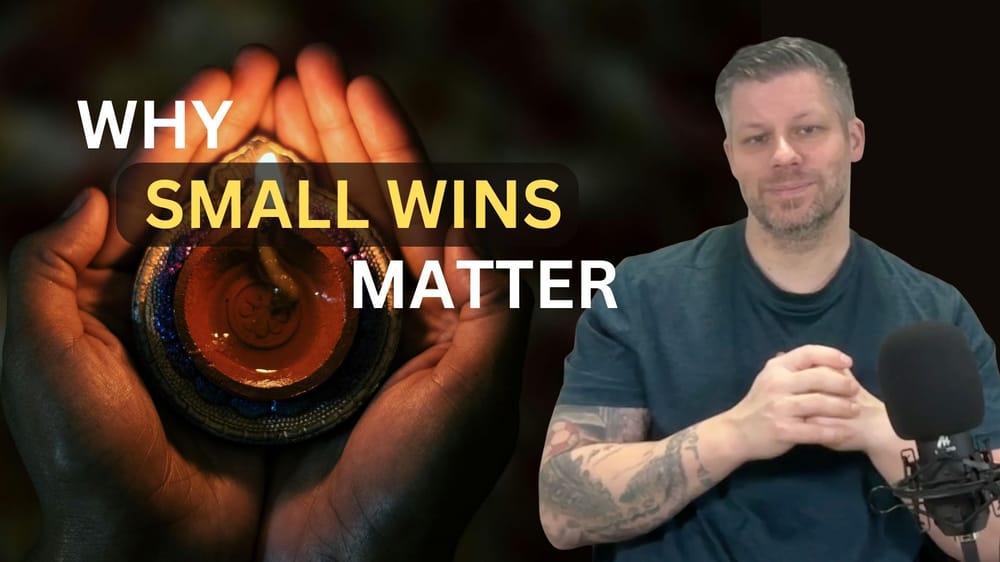

How Small Daily Wins Rebuild Your Identity
Most driven men believe their life will change when they feel ready.
Ready to be disciplined.
Ready to be consistent.
Ready to finally become the version of themselves they know they are capable of being.
So they wait.
They wait for motivation.
They wait for clarity.
They wait for life to calm down.
But identity does not change when you feel ready.
Identity changes when your brain sees evidence.
And the kind of evidence that rewrites identity is rarely dramatic. It is not emotional. It is not loud.
It is small, repeatable proof.
If you misunderstand this, you will spend years restarting instead of building.
The Identity Myth Most Men Believe
There is a sequence most men unconsciously operate from:
First I feel confident.
Then I act confident.
Then I become confident.
Or:
Once I feel disciplined, I will show up consistently.
That sequence is backward.
Your brain does not believe intentions. It does not believe goals. It does not believe late night speeches you give yourself about how tomorrow will be different.
Your brain believes patterns.
Specifically, it tracks what you repeatedly do under mild stress, inconvenience, or resistance. That is where identity is formed.
You can have a powerful breakthrough. You can feel emotionally reset. You can commit to a new routine with intensity.
But if the behavior is not repeated enough times for your nervous system to recognize it as predictable, identity does not update.
This is why strong starts collapse.
Not because you lack discipline.
Because your system never received enough evidence to trust the new version.
Why Big Resets Feel Powerful But Rarely Stick
Big resets create contrast.
New routine.
New rules.
New standards.
For a short time, that contrast feels like transformation. It produces energy. It produces momentum. It feels decisive.
But intensity is not the same thing as identity.
Your nervous system does not stabilize around intensity. It stabilizes around repetition.
When you spike effort and then disappear, your brain logs that pattern. When you restart repeatedly, your system builds a new identity:
This man starts hard and fades.
And once that identity becomes familiar, it quietly shapes future behavior.
Your nervous system does not trust intensity. It trusts what is predictable.
That is why small daily wins outperform dramatic resets.
They are sustainable. They are repeatable. They create stability instead of spikes.
The Nervous System and the Illusion of Readiness
Waiting to feel ready sounds responsible. It feels strategic.
In reality, it is often protection.
Your nervous system is wired for safety, not growth. Safety means predictability. Growth often feels uncertain.
So your system whispers:
Once things slow down.
Once the stress passes.
Once I feel more confident.
But confidence is not the starting point.
Confidence is the result of repetition.
It is your brain saying:
We have done this before.
We followed through.
We survived the discomfort.
Readiness does not create identity change.
Consistency does.
And consistency does not come from pushing harder. It comes from choosing actions small enough that your system does not resist them.
How Your Brain Actually Builds Identity
Your brain is constantly collecting behavioral data about you.
Every time you follow through, even in a small way, it updates its internal model.
Every time you break a promise to yourself, it updates that model too.
This process is automatic. It is not emotional. It is not judgmental. It is pattern recognition.
At a subconscious level, your brain is asking one question:
Can I trust this man to do what he says?
Over time, the answer to that question becomes your identity.
Not the identity you desire.
The identity you demonstrate.
If the answer is inconsistent, your internal trust becomes unstable. If the answer is predictable, stability increases.
Confidence is not hype. It is familiarity.
It is your nervous system recognizing a reliable pattern.
What Small Daily Wins Actually Look Like
Small wins are unimpressive.
They do not make you feel heroic. They do not create dramatic shifts in a single day.
They look like:
Five minutes of movement when you do not feel like training.
One page written instead of none.
One intentional pause before reacting in frustration.
One promise kept that no one else sees.
The critical question is not:
What can I do on my best day?
It is:
What can I repeat on my worst reasonable day?
Identity is built at the level you can sustain under stress, not at the level you can perform under motivation.
When you choose actions that are small enough to repeat consistently, you begin to teach your nervous system something powerful:
Effort does not equal overwhelm.
Consistency does not equal burnout.
That belief shift changes behavior more than intensity ever will.
Breaking the Start–Stop Cycle
Many driven men are not exhausted from effort.
They are exhausted from restarting.
They overcommit.
They push aggressively.
They miss once.
They collapse the entire structure.
They reset.
Over time, they associate discipline with pressure and consistency with exhaustion.
Their nervous system begins to resist before they even begin.
Small, controlled wins break this association.
They separate effort from punishment.
They separate discipline from self attack.
As repetition stabilizes, something subtle happens.
You stop negotiating with yourself.
You stop announcing new beginnings.
You stop relying on motivation.
You simply execute more often than you do not.
That is identity shift.
Not loud. Not emotional. Not dramatic.
Stable.
When Identity Is Built Through Repetition
When identity is built through small, consistent proof:
Comparison loses intensity.
Decisions feel lighter.
Internal conflict decreases.
Not because life is easier.
Because you are no longer fighting yourself.
You are not trying to force a personality change. You are reinforcing a pattern your nervous system recognizes as reliable.
This is not about doing more.
It is not about optimizing every hour.
It is not about hustle.
It is about alignment.
Becoming someone your system trusts.
The Real Work
You do not need a massive reset.
You need evidence.
Daily evidence.
Quiet evidence.
Proof stacked consistently enough that your brain has no choice but to update the story it tells about who you are.
Identity does not change in a burst.
It settles in.
And when it does, you will not feel dramatically different overnight.
You will simply notice something powerful.
You no longer restart.
You build.
And once that becomes familiar, everything changes.